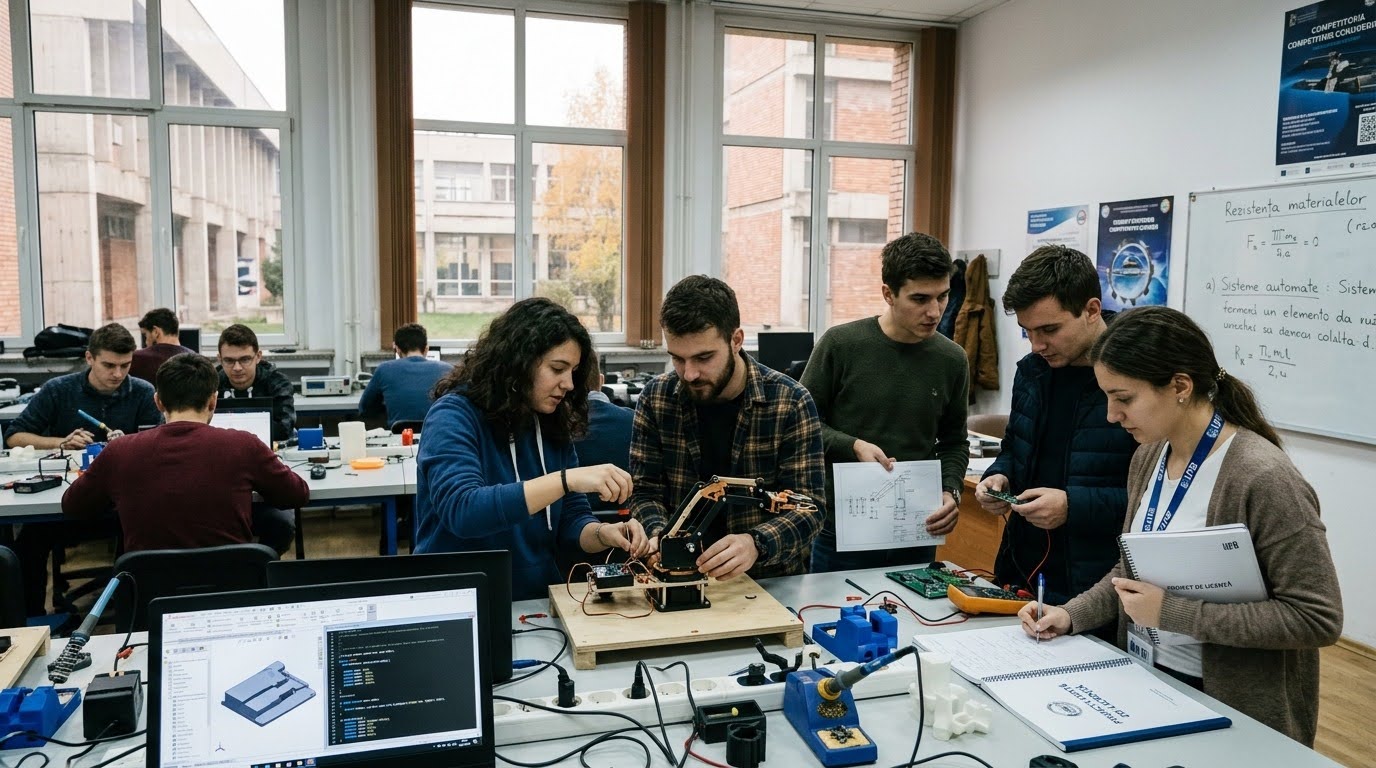
Conachi Academy connects international students with top Romanian IT programs. This guide = complete overview of studying Computer Science in Romania.
Related: Academics Overview | Undergraduate Programs | Graduate Programs
Why Romania for IT and Computer Science?
Romania’s Tech Industry Status
Global recognition:
- #2 in Europe for IT outsourcing (Eurostat data)
- 250,000+ IT professionals nationwide
- Tech sector = 6.5% of GDP (fastest growing)
- Bucharest = “Little Silicon Valley” nickname
Major tech hubs:
- Bucharest – capital, largest tech scene, multinational HQs
- Cluj-Napoca – “Transylvania’s Silicon Valley”, startup ecosystem
- Timișoara – automotive software, embedded systems
- Iași – growing tech community, lower living costs
- Brașov – engineering focus, automotive tech
Why International Students Choose Romania
Academic quality – EU-accredited degrees, recognized globally
English-taught programs – no Romanian language barrier (undergraduate + master’s)
Practical focus – Romanian universities emphasize hands-on coding, real projects
Industry connections – universities partner with tech companies (internships, jobs)
EU study visa – right to stay, work post-graduation
Gateway to EU tech market – experience counts across Europe
Romania education quality: Bologna Process member, degrees valid across EU.
Top Romanian Universities for IT/Computer Science
1. Politehnica University of Bucharest
Location: Bucharest
Founded: 1818 (oldest technical university Romania)
IT programs: Computer Science, Software Engineering, Cybersecurity, AI
Strengths:
- Top engineering university Romania (QS Rankings)
- Strong industry partnerships (Microsoft, Oracle, IBM)
- Research centers: AI, machine learning, robotics
- Large international student community
Languages: Romanian, English
Notable: Alumni work at Google, Amazon, Facebook globally
2. Technical University of Cluj-Napoca
Location: Cluj-Napoca
IT programs: Computer Science, Data Science, Software Engineering, Embedded Systems
Strengths:
- Heart of Romania’s startup ecosystem
- Direct pipeline to Cluj tech companies (over 400 IT firms)
- Modern labs, makerspaces
- Strong emphasis on entrepreneurship
Languages: Romanian, English, German
Notable: Cluj = second largest tech hub after Bucharest, university central to ecosystem
3. West University of Timișoara
Location: Timișoara
IT programs: Computer Science, Information Systems, Computational Mathematics
Strengths:
- Excellent research output
- Partnerships with automotive tech companies (Continental, Hella)
- Focus on mathematical foundations + practical coding
- Affordable city for students
Languages: Romanian, English
4. Alexandru Ioan Cuza University (UAIC)
Location: Iași
IT programs: Computer Science, Informatics, Applied Computer Science
Strengths:
- Strong theoretical computer science foundation
- Growing industry connections
- Lower competition for internships (smaller city)
- Affordable living
Languages: Romanian, English
5. University Politehnica of Timișoara
Location: Timișoara
IT programs: Computer Engineering, Embedded Systems, Software Engineering
Strengths:
- Engineering-focused approach
- Automotive software specialization
- Industry-sponsored labs
- High employment rate graduates
Languages: Romanian, English, German
More universities: Universities Directory | Study Programs List
Undergraduate IT/Computer Science Programs
Typical Program Structure (3-4 Years)
Year 1: Fundamentals
- Programming basics (C, C++, Python)
- Mathematics (calculus, linear algebra, discrete math)
- Computer architecture
- Data structures, algorithms
- Introduction to databases
Year 2: Core computer science
- Object-oriented programming (Java, C++)
- Operating systems
- Computer networks
- Software engineering
- Web development
- Statistics, probability
Year 3: Specializations
- Databases (SQL, NoSQL)
- AI and machine learning
- Mobile development (Android, iOS)
- Cybersecurity
- Cloud computing
- Electives based on interests
Year 4 (if applicable): Advanced + capstone
- Advanced topics (distributed systems, blockchain, etc.)
- Industry internship (often mandatory)
- Bachelor thesis project
- Electives
Teaching style:
- 60% practical (labs, coding assignments, projects)
- 40% theory (lectures, exams)
- Group projects common (teamwork skills)
- Industry guest lectures
Popular Specializations
Software Engineering – full-stack development, agile methodologies, DevOps
Cybersecurity – ethical hacking, network security, cryptography
Artificial Intelligence – machine learning, deep learning, neural networks
Data Science – big data, analytics, visualization
Game Development – graphics, game engines, Unity/Unreal
Mobile Development – iOS, Android, cross-platform
Cloud Computing – AWS, Azure, Google Cloud architectures
Embedded Systems – IoT, automotive software, robotics
Master’s Programs in IT (1-2 Years)
Advanced Specializations
Common master’s tracks:
- Advanced Software Engineering – enterprise systems, microservices, architecture
- Artificial Intelligence & Machine Learning – deep learning, NLP, computer vision
- Cybersecurity & Information Security – penetration testing, forensics, compliance
- Data Science & Big Data – analytics, Hadoop, Spark, predictive modeling
- Cloud & Distributed Systems – scalable architectures, containerization, Kubernetes
- Human-Computer Interaction – UX/UI, accessibility, interaction design
- Computational Intelligence – evolutionary algorithms, fuzzy logic, neural networks
Research Opportunities
Master’s students access:
- University research labs (AI, robotics, security)
- EU-funded research projects
- Conference participation
- Publishing opportunities
- PhD pathway (if research-oriented)
Notable: Romanian universities collaborate with EU research networks. Master’s students often contribute to international projects.
Admission Requirements
Undergraduate Admissions
Academic requirements:
- High school diploma (equivalent to Romanian baccalaureate)
- Mathematics grades strong (IT programs math-heavy)
- Physics, computer science helpful (not always required)
- Minimum GPA varies by university (typically 60-70% equivalent)
Language requirements:
- English-taught programs: IELTS 6.0+ or TOEFL 80+ or equivalent
- Romanian-taught: Romanian language proficiency (B1-B2) or preparatory year
Additional:
- Entrance exam (mathematics + logic) at some universities
- Or admission based on high school grades only (varies)
- No specific computer science background required (taught from basics)
Master’s Admissions
Academic requirements:
- Bachelor’s degree in Computer Science, IT, Engineering, or related field
- Good academic standing (minimum GPA requirements)
- Recommendation letters (2-3)
- Statement of purpose
Language requirements:
- Same as undergraduate (IELTS 6.0+, TOEFL 80+)
Additional:
- Portfolio of projects (helpful but not always required)
- Work experience (advantage for some programs)
- Interview (some universities)
Application process guide: How to Apply | Dates & Deadlines
What to Expect: Student Experience
Classroom & Lab Environment
Class sizes:
- Lectures: 100-200 students (larger universities)
- Labs/seminars: 15-30 students (hands-on work)
Teaching methods:
- Lectures (theory, concepts)
- Lab sessions (coding, implementation)
- Project-based learning (team assignments)
- Industry case studies
- Hackathons (university-organized + external)
Assessment:
- Midterm/final exams (theory)
- Lab assignments (weekly coding tasks)
- Projects (individual + group)
- Presentations
- Attendance often mandatory labs
Technology & Resources
University facilities:
- Modern computer labs (updated software, hardware)
- High-speed internet
- Software licenses (Microsoft, JetBrains, Adobe, etc.) free for students
- Library access (digital resources, research papers)
- 24/7 study spaces (many universities)
Free software access:
- IDEs (Visual Studio, IntelliJ, PyCharm, etc.)
- Cloud credits (AWS, Azure, Google Cloud – education accounts)
- Development tools
- Design software
Language of Instruction
English-taught programs available:
- Most major universities offer English IT programs
- Lectures, exams, materials all English
- No Romanian language requirement for studies
- Recommended learn basic Romanian (daily life easier)
Benefits English programs:
- International student community
- Professors often industry-experienced, English-fluent
- Access to English tech resources, documentation
Internships & Industry Connections
Internship Opportunities
During studies:
- Summer internships (companies actively recruit students)
- Part-time work (20 hours/week allowed on student visa)
- University-organized career fairs (multiple per year)
- Company-sponsored labs (students work on real projects)
Major companies hiring interns Romania:
- Multinational: Microsoft, Amazon, Oracle, IBM, HP, Intel, Adobe
- Outsourcing: Endava, Ness Digital Engineering, Softvision, Bitdefender
- Startups: UiPath (RPA unicorn started Romania), many Cluj/Bucharest startups
- Product companies: Bitdefender (cybersecurity), UIPath, FintechOS
Internship benefits:
- Paid internships common (competitive stipends)
- Real-world experience
- Networking
- Often lead to full-time job offers post-graduation
University-Industry Partnerships
Examples:
- Microsoft Romania – partnerships with Politehnica Bucharest, UBB Cluj
- Oracle Academy – curriculum integration, certifications
- IBM – AI/cloud labs at universities
- Bitdefender – cybersecurity research collaboration
What this means:
- Industry-relevant curriculum (updated regularly)
- Guest lectures from company engineers
- Sponsored projects (real problems, real solutions)
- Job placement pipelines
Career Outcomes After Graduation
Employment Opportunities Romania
Job market status:
- IT unemployment rate Romania: <1% (extreme demand)
- Average 5+ job offers per graduate
- Starting positions abundant
- Companies compete for talent
Common entry-level roles:
- Software Developer – full-stack, frontend, backend
- Web Developer – JavaScript, React, Angular, Node.js
- Mobile Developer – iOS, Android, React Native
- Data Analyst – SQL, Python, analytics tools
- QA Engineer – testing, automation
- DevOps Engineer – CI/CD, infrastructure
- Cybersecurity Analyst – security operations, monitoring
- Junior Data Scientist – machine learning, data modeling
Career progression:
- Junior – Mid-level (2-3 years)
- Mid-level – Senior (4-6 years)
- Senior – Tech Lead / Architect (7-10 years)
- Management / CTO track possible
Post-Graduation Work Rights
Student visa – work permit:
- After graduation, can apply for work permit (employer sponsors)
- Process straightforward (EU regulations favor skilled workers)
- Romania IT sector actively retains international graduates
Long-term residence:
- After 5 years legal residence – permanent residence eligible
- Permanent residence – no work permit needed, full EU mobility
- Path to Romanian citizenship (8 years total)
EU Blue Card:
- For highly skilled workers (IT qualifies)
- Faster path to permanent residence
- Easier mobility within EU
More info: EU work rights
Working Across Europe
Romanian degree = EU recognition:
- Bologna Process member – degree valid all EU countries
- Romanian IT experience valued across Europe
- Many graduates move to Western Europe (Germany, Netherlands, UK)
Typical career paths:
- Work Romania 2-3 years (build experience)
- Move to higher-paying EU market (Berlin, Amsterdam, London)
- OR stay Romania (growing salaries, lower living costs = good lifestyle)
European tech hubs hiring Romanian graduates:
- Berlin, Munich (Germany)
- Amsterdam (Netherlands)
- London (UK)
- Stockholm (Sweden)
- Dublin (Ireland)
Entrepreneurship & Startups
Romania startup ecosystem growing:
- Cluj, Bucharest = active startup communities
- Government incentives for tech startups
- Access to EU startup funding
- Accelerators, incubators available
Success stories:
- UiPath – Romanian RPA unicorn, $35B valuation (founded by Romanian graduates)
- Bitdefender – global cybersecurity leader
- Many smaller successful SaaS, fintech, AI startups
Students can:
- Join early-stage startups during studies
- Launch own startups (university support programs)
- Access mentorship, funding networks
Skills You’ll Develop
Technical Skills
Programming languages:
- C, C++ (fundamentals)
- Java, Python (most common)
- JavaScript, TypeScript (web development)
- SQL (databases)
- Plus: Go, Rust, Kotlin, Swift (depending on specialization)
Frameworks & technologies:
- Web: React, Angular, Vue.js, Node.js, Django, Flask
- Mobile: Android SDK, iOS (Swift), React Native, Flutter
- Data: Pandas, NumPy, TensorFlow, PyTorch, scikit-learn
- DevOps: Docker, Kubernetes, Jenkins, Git, CI/CD pipelines
- Cloud: AWS, Azure, Google Cloud basics
Core concepts:
- Data structures & algorithms
- Object-oriented programming
- Software design patterns
- Database design (SQL, NoSQL)
- Computer networks, security
- Operating systems concepts
- Version control (Git)
Soft Skills
University develops:
- Teamwork – group projects mandatory
- Problem-solving – coding challenges, debugging
- Time management – juggling courses, projects, internships
- Communication – presentations, documentation
- Critical thinking – algorithm design, optimization
- English fluency – international environment improves language
Industry-ready:
- Agile methodologies exposure
- Code review practices
- Technical writing (documentation)
- Client interaction (in industry projects)
International Student Support
Academic Support
Universities offer:
- Tutoring programs (peer tutors, professor office hours)
- Study groups
- Online resources (lecture recordings, materials)
- Language support (English for academic purposes)
Conachi Academy provides:
- Pre-arrival academic preparation guidance
- University selection based on your profile
- Application assistance
- Connection with current students (mentorship)
More: Support & Guidance
Integration & Community
Student life:
- International student associations (active in all major universities)
- Tech clubs, hackathons, coding competitions
- Cultural events, festivals
- Language exchange programs (learn Romanian)
Romanian students:
- Generally friendly to internationals
- Many speak English (especially IT students)
- Collaborative culture (group work common)
Campus experience: The Campus Experience | Student Activities
Living as an IT Student in Romania
Daily Life
Accommodation:
- University dormitories (shared rooms, affordable)
- Private rentals (studios, shared apartments)
- Co-living spaces (popular in Cluj, Bucharest)
Transportation:
- Public transport excellent (buses, trams, metro in Bucharest)
- Student discounts
- Bike-friendly cities (Cluj especially)
Food:
- University canteens (very affordable)
- Supermarkets (international brands available)
- Restaurants (wide range, affordable)
More info: Check our blog: Student Housing Guide
Technology Scene
Tech events (students attend):
- TechSylvania (Cluj) – major tech conference
- How to Web (Bucharest) – startup conference
- DevTalks – developer conference
- Hackathons – monthly, various cities
- Meetups – programming language groups, framework communities
Networking opportunities:
- Student chapters (Google Developer Groups, Microsoft Student Partners)
- Open-source communities
- Startup weekends
- Career fairs
Why Choose Conachi Academy for IT Studies?
We help you:
✓ Find right university – match your profile, career goals, specialization interests
✓ Navigate applications – document prep, deadlines, requirements
✓ Understand programs – curriculum details, teaching style, industry connections
✓ Plan career path – internships, job prospects, post-graduation options
✓ Connect with students – current IT students, alumni experiences
✓ Settle in Romania – pre-departure guidance, arrival support
Our process:
- Free consultation – discuss your goals, interests
- University recommendations – tailored to your profile
- Application assistance – documents, forms, submissions
- Visa support – student visa process guidance
- Pre-departure prep – what to expect, how to prepare
- Ongoing support – available after arrival too
Contact us:
Phone: +40 720 766 984
Website: conachiacademy.com
Forms: Apply Now | Request Info
Comparing Romanian IT Programs to Other Countries
Romania vs Western Europe (Germany, Netherlands, UK)
Advantages Romania:
- English programs widely available (no German/Dutch needed)
- Growing tech industry (more opportunities than before)
- EU degree (same recognition)
- Direct path to permanent residence (5 years)
- Lower competition for internships (Western Europe = saturated)
Similar quality:
- Bologna Process = standardized EU education
- Modern curriculum, industry partnerships
- Research opportunities
Romania vs India/Nepal (Home Country)
Advantages Romania:
- EU degree = global recognition
- Industry exposure (multinational companies)
- Post-graduation work rights in EU
- Path to EU permanent residence/citizenship
- International experience (career boost)
Considerations:
- Language barrier initially (Romanian for daily life)
- Distance from family
- Cultural adjustment
Romania vs USA/Canada
Advantages Romania:
- No massive student debt (much more affordable)
- Easier immigration pathway (EU Blue Card vs H1B lottery)
- Work while studying allowed (20 hrs/week)
- Faster to permanent residence (5 years vs 10+ years)
Trade-offs:
- US/Canada tech salaries higher initially
- Romanian salaries competitive within Europe, lower than Silicon Valley
Success Stories: IT Graduates from Romania
Example career paths:
Graduate A (Indian student):
- Studied Software Engineering, Politehnica Bucharest
- Internship at Oracle Romania (year 3)
- Job offer before graduation (Amazon Bucharest)
- After 2 years – moved to Amazon Berlin (internal transfer)
- Now Senior Software Engineer, Germany
Graduate B (Nepali student):
- Computer Science, Technical University Cluj-Napoca
- Joined startup during studies (part-time developer)
- Graduated – became full-time at same startup
- Startup acquired by larger company
- Now Product Manager, Cluj (stayed in Romania)
Graduate C (Pakistani student):
- Cybersecurity master’s, UBB Cluj-Napoca
- Research project with Bitdefender
- Hired by Bitdefender post-graduation
- Obtained Romanian permanent residence (5 years)
- Now Security Architect, remote work for EU clients
Common thread: Romanian IT education – strong foundation – multiple career options.
Frequently Asked Questions
Do I need prior programming experience to apply?
Undergraduate: No. Programs start from basics. High school math important, coding taught from scratch.
Master’s: Yes. Need CS/IT/engineering bachelor’s. Some programs accept related fields (physics, mathematics) with programming background.
Can I work part-time during studies?
Yes. Student visa allows 20 hours/week part-time work. Many students do:
- Freelance programming
- Part-time developer jobs
- Internships
- Teaching assistantships
Will I find IT jobs in English in Romania?
Yes. Most tech companies Romania work in English:
- Multinational companies (Microsoft, Amazon, etc.) = English workplaces
- Outsourcing companies = English (serve international clients)
- Startups = often English (international teams)
Romanian language helps but not required for IT jobs.
Is Romania safe for international students?
Yes. Romania = safe EU country. Low crime rates, especially violent crime. University cities very safe. Standard precautions apply (like any city).
More: Student Life in Romania
Can I transfer credits from my home country?
Depends on university. Some accept credit transfers (especially within EU). Non-EU transfers case-by-case. Contact university directly or ask us.
What after bachelor’s – master’s or job?
Both valid paths:
Master’s first:
- Deeper specialization
- Research opportunities
- Higher starting positions
- Delay job market entry (study 2 more years)
Job first:
- Immediate income, experience
- Can do part-time master’s later (many programs offer evening/weekend)
- Companies often sponsor master’s for employees
No wrong choice. Depends on goals.
Can I study IT in Romanian language?
Yes. All programs available in Romanian too. Requires:
- Romanian language proficiency (B2 level)
- OR preparatory year (learn Romanian first)
Advantage: Even more affordable than English programs sometimes.
Next Steps: Start Your IT Education Journey
Ready to study IT in Romania?
Step 1: Explore programs
Browse Study Programs and Universities
Step 2: Check requirements
Review How to Apply and Dates & Deadlines
Step 3: Contact Conachi Academy
Request Information or Apply Now
Step 4: Prepare application
We’ll guide you through document prep, submission, visa
Step 5: Get accepted & arrive
Pre-departure orientation, arrival support included
Additional Resources
Conachi Academy:
External resources:
- Romanian Ministry of Education
- Study in Europe Portal
- Bologna Process
- Eurostat Education Statistics
- EU Work Rights
Tech community Romania:
Summary: Why IT in Romania?
Academic quality – EU-accredited, recognized globally
Industry demand – massive shortage, guaranteed jobs
Practical focus – hands-on learning, real projects
Career opportunities – multinational companies, startups, EU mobility
Post-graduation options – work in Romania or anywhere EU
Pathway to residency – 5 years to permanent EU residence
Growing tech hub – Romania ascending, not stagnant
IT education Romania = smart investment. EU degree, industry experience, career launch pad.
Questions? Contact Conachi Academy – we’re here to help.
Tags: study IT Romania, Computer Science Romania, Romanian universities IT programs, tech education Romania, software engineering Romania, international students Romania