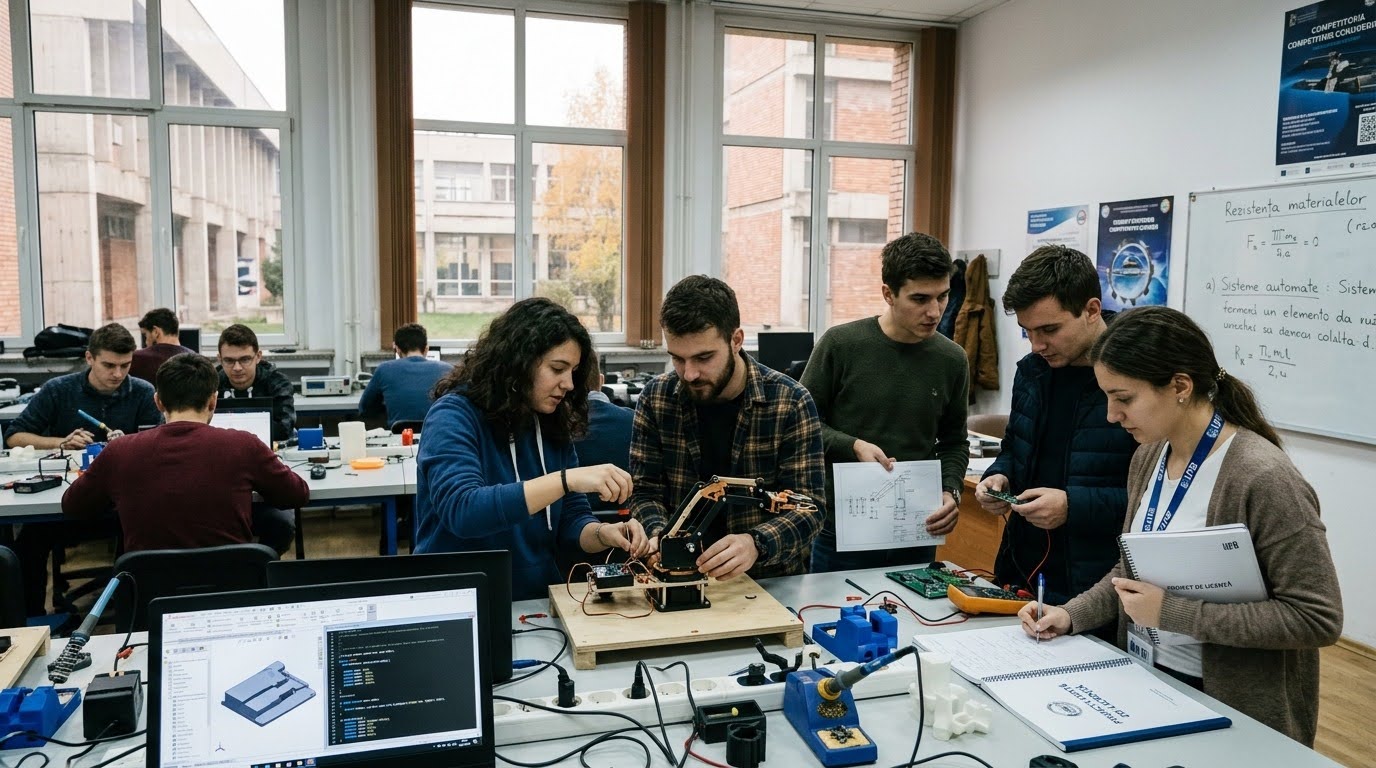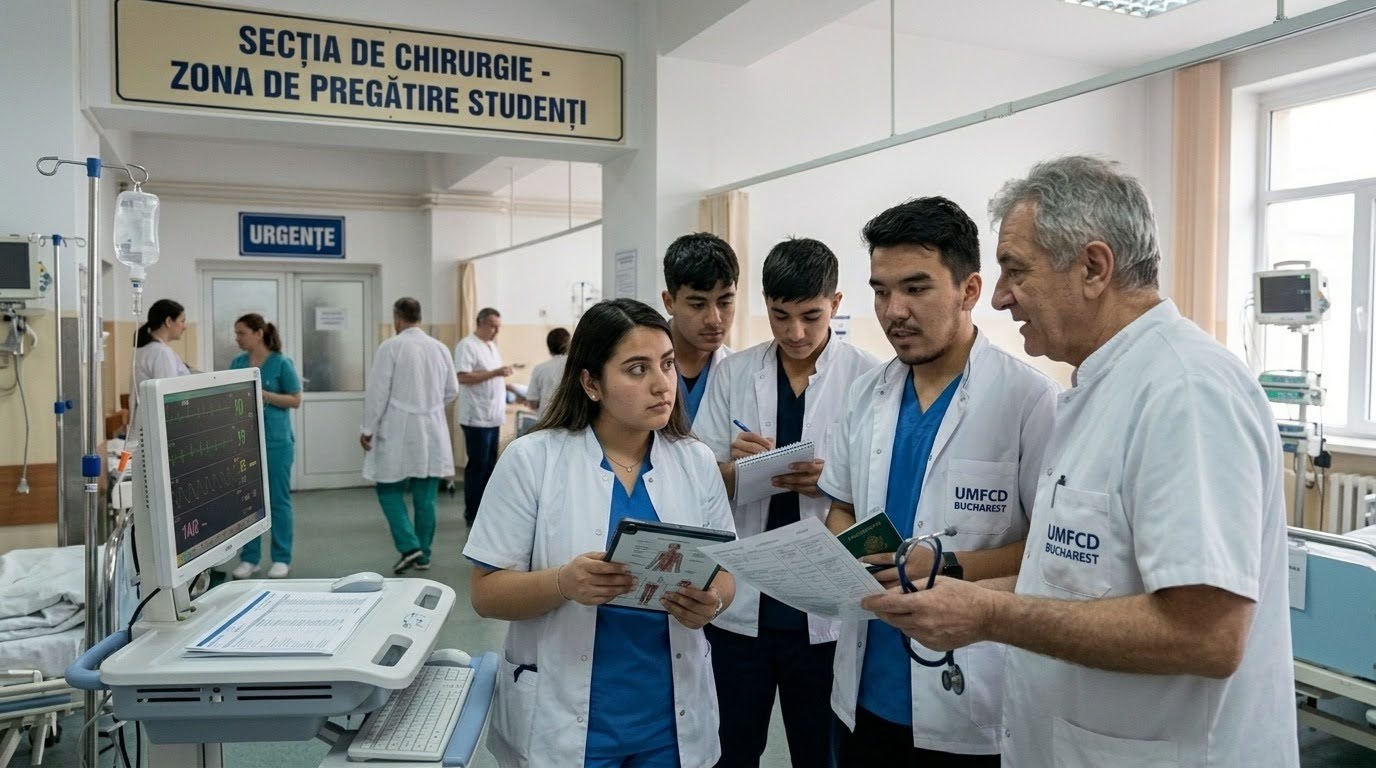
ECTS -the European Credit Transfer and Accumulation System -is the official measurement that European universities use to record what you have learned, how much workload you completed, and how that learning compares to study at any other recognised institution.
In this guide, you will learn what ECTS credits are, how Romanian universities apply them, how those credits move between countries, and why understanding the system early can help you make smarter choices about your studies and your career path.
What Is the ECTS System?
ECTS stands for the European Credit Transfer and Accumulation System. It is a standardised framework used across the European Higher Education Area, including all EU member states and several partner countries.
Its purpose is simple: to make student workload, learning outcomes, and academic progress comparable from one university to another.
Under ECTS, every course or module you complete carries a defined credit value. Those credits represent both the time you invest in studying and the learning outcomes you achieve.
This makes your transcript readable to admissions officers, employers, and accreditation bodies anywhere in Europe and increasingly, around the world.
You can read more about the framework directly from the European Commission’s official ECTS resource.
How ECTS Credits Work in Practice
In the standard ECTS model, one academic year of full-time study is equal to 60 credits. A typical bachelor’s degree therefore equals 180 to 240 credits, depending on whether the programme lasts three or four years. A master’s programme normally adds 60 to 120 more credits.
One ECTS credit usually represents 25 to 30 hours of total student workload. That number includes lectures, seminars, lab time, independent reading, project work, and exam preparation.
It is not just time spent in class -it reflects the full effort the programme expects from you.
This is why ECTS is useful: it measures real learning, not just attendance.
ECTS Credits at Romanian Universities
Romania is a full member of the European Higher Education Area, and its public and accredited private universities apply ECTS across all study levels.
You will see credit values clearly listed for every course in your study plan, whether you enrol in an undergraduate programme or a graduate programme.
A typical Romanian bachelor’s degree in a field such as business, IT, or engineering carries 180 ECTS over three years.
Regulated professions like medicine, dentistry, pharmacy, and architecture follow longer cycles and carry more credits, in line with EU directives.
You can explore the available accredited Romanian universities and the full list of study programs to see how credits are structured in each field.
How Romanian ECTS Credits Transfer Within the EU
This is where ECTS becomes especially powerful for international students.
Erasmus+ and Short-Term Mobility
If you spend a semester abroad through the Erasmus+ programme, the credits you earn at the host university are transferred back to your Romanian university and counted toward your final degree.
This works in both directions and is built on a Learning Agreement signed before mobility begins.
Changing Universities Mid-Degree
If your circumstances change and you need to continue your studies in another EU country, the credits you have already earned in Romania can be evaluated and recognised by the new institution.
The receiving university decides how many of your existing credits fit into its own programme, but ECTS gives both sides a common language to make that decision fairly.
Continuing to a Master’s Abroad
A Romanian bachelor’s degree with 180 ECTS is fully accepted as a basis for master’s admission across the EU, EEA, Switzerland, and the United Kingdom.
Your final transcript and Diploma Supplement provide everything an international admissions office needs to evaluate your background.
Recognition Beyond Europe
ECTS is a European system, but its influence extends much further.
Universities and employers in North America, the United Kingdom, Australia, the Gulf region, and across Asia are familiar with ECTS and routinely convert it for their own credit or grading systems.
For example, U.S. universities often convert 2 ECTS to roughly 1 U.S. semester credit, although the exact ratio depends on the receiving institution’s evaluation.
For students from Nepal and other parts of Asia and Africa, this matters in two ways. First, your Romanian degree opens doors at universities worldwide if you want to pursue further study.
Second, if you return home or move to a third country, your transcript carries the credibility of the European Higher Education Area.
The Diploma Supplement -Your Global Passport
Every Romanian university issues a Diploma Supplement together with your final diploma.
It is a multilingual document, normally in Romanian and English, that explains the structure, level, content, and grading scheme of your degree in a format recognised internationally.
The Diploma Supplement matters because it answers the questions a foreign employer or admissions officer will ask: What level is this qualification? How long did it take? What grading scale was used? How does it compare to local standards?
When applying for jobs or further study abroad, the Diploma Supplement, combined with your ECTS transcript, gives a clear and trusted record of your education.
What This Means for Nepali and International Students
For a student travelling from Nepal, South Asia, or Africa, choosing a country with a clear, internationally readable credit system reduces a lot of risk.
You know exactly what you are studying, how it compares globally, and how your qualification will be understood after graduation.
Preparing well before you leave is essential. Document attestation, translation, language readiness, and visa documentation all take time and need to be done in the right order.
AMC Nepal, a Kathmandu-based preparation consultancy and partner of Conachi Academy, supports Nepali candidates through this stage -including study-in-Romania preparation, Romanian language training, and pre-departure orientation.
Many graduates also consider working in Romania or elsewhere in the EU after their studies.
For employment pathways in Romania, EJS Europe is a licensed recruitment partner working with verified employers across sectors such as hospitality, construction, and logistics.
A clear academic system at the front end, combined with proper preparation, makes the whole journey more transparent and more manageable.
Quick FAQ on ECTS Credits in Romania
How many ECTS credits do I need for a Romanian bachelor’s degree?
Most programmes require 180 ECTS over three years. Regulated fields such as medicine, dentistry, pharmacy, and architecture require more, in line with EU norms.
Will my Romanian ECTS credits be accepted if I move to another EU country?
Yes. Recognition is the standard across the European Higher Education Area, though each receiving university confirms how the credits map to its own programme.
Are ECTS credits recognised outside Europe?
Widely, yes. Universities and employers in many regions are familiar with ECTS and apply their own conversion to local credit systems.
Do I receive a Diploma Supplement automatically?
Yes. Romanian universities issue the Diploma Supplement together with your final diploma at no extra cost, normally in Romanian and English.
Where can I check credit requirements before applying?
You can review programme structures on the official pages for each course. Conachi Academy’s how-to-apply guide and the full academics overview are good starting points.
A Final Note
ECTS is more than a number on a transcript. It is the reason your study in Romania can travel with you -across the EU, across continents, and across stages of your career.
Choosing an accredited Romanian university means choosing a transparent, internationally recognised credit system from day one.
That clarity is one of the strongest reasons international students continue to choose Romania for European higher education.
If you are exploring your options, take time to review the available programmes, understand the credit structure of each one, and prepare your documents carefully. A clear plan today makes a much stronger application tomorrow.
You can request more information whenever you are ready to take the next step.